Ephesians 4:32 (NIV)
Be kind and compassionate to one another, forgiving each other, just as in Christ God forgave you.
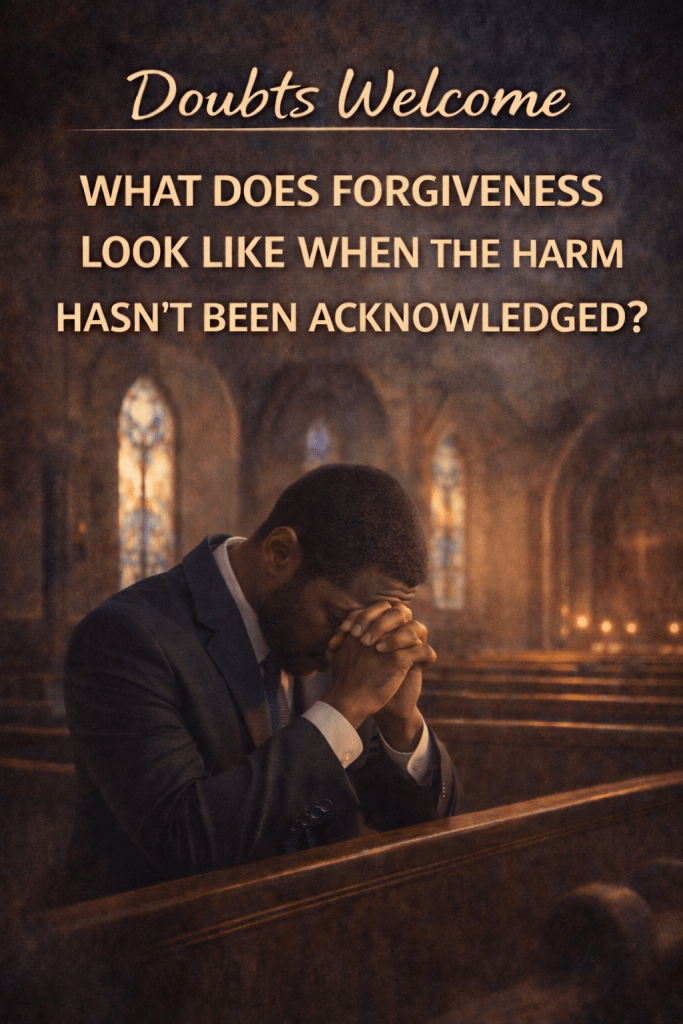
This is one of the hardest kinds of forgiveness.
Because it would be easier if there was an apology.
If there was honesty.
If someone simply said, “I was wrong.”
But what happens when that never comes?
What happens when the harm is real…
but the acknowledgment isn’t?
The truth is, forgiveness in those situations looks different.
It’s not a conversation.
It’s not closure.
It’s not everything being made right.
Sometimes, it’s something much quieter.
It’s choosing not to carry the weight of what happened every single day.
It’s deciding that their silence won’t define your healing.
It’s releasing the expectation that they will finally understand.
And that’s not easy.
Because part of us still wants recognition.
Validation.
Justice.
We want someone to say, “That shouldn’t have happened to you.”
And when that doesn’t come, it can feel like the wound stays open.
But forgiveness, in this context, isn’t about pretending it didn’t hurt.
And it’s not about excusing what was done.
It’s about freeing yourself from being tied to it.
It’s saying:
“I may not get an apology…
but I won’t let this control me forever.”
It’s also recognising that forgiveness doesn’t mean access.
You can forgive…
and still have boundaries.
You can let go…
and still choose distance.
You can release the hurt…
without reopening the door.
Because reconciliation requires honesty.
But forgiveness can happen even when honesty is absent.
That’s what makes it so difficult—and so powerful.
You’re choosing peace without permission.
Healing without validation.
Freedom without closure.
And that takes strength.
So if you’re in that place—waiting for words that may never come—it’s okay to grieve that.
But don’t let your healing depend on someone else’s acknowledgment.
Because even in the silence…
You are still allowed to move forward.
 Doubts Welcome
Leave a comment